

The loss of a teenage child from malaria is a pain no family should ever have to endure. This kind of pain is unfathomable! It shatters dreams, devastates parents, and leaves an empty desk in a classroom that will never again be filled. The recent death of a student at Gayaza High School is a heartbreaking reminder that malaria continues to steal the lives of Uganda's children, including those we often assume are safe because they are attending school. This tragedy should not be viewed as an isolated event. It should be a national wake-up call.
In epidemiological week 26, Uganda recorded 143,756 confirmed malaria cases and a 30.9% malaria test positivity rate. The ministry also reported 17 deaths during the same week, reminding us that despite remarkable progress, malaria continues to claim the lives of our children when it is a preventable disease. Yet behind every statistic is a child, a family, a teacher, and a community forever changed. Malaria in schools is more than just a health problem; it is an education crisis. Every malaria episode keeps a learner away from school, disrupts examinations, reduces concentration, and places huge emotional and financial strain on families. And yet, known malaria prevention in schools costs less than $1 per student. A child who survives severe malaria may experience long-term cognitive impairment, poorer educational attainment, and repeated absenteeism. Studies estimate that each malaria episode results in 2 to 6.5 days of missed schooling, with cumulative effects on academic performance and future productivity.
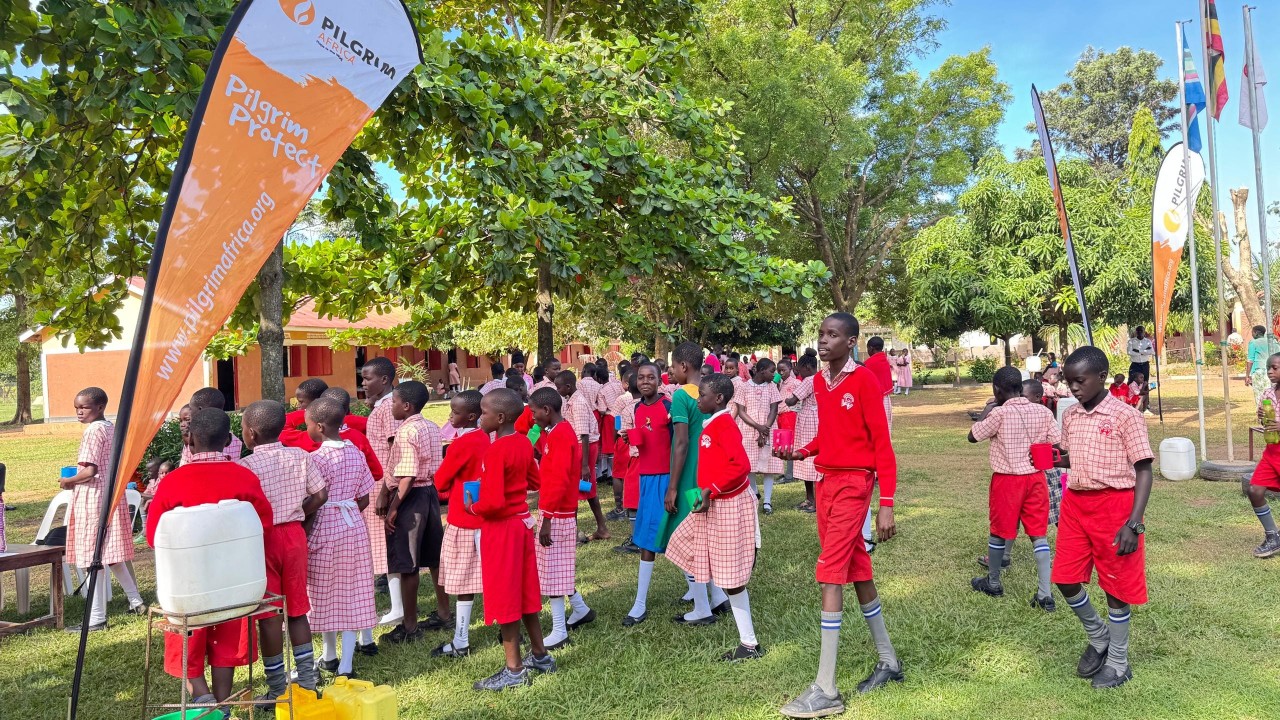
With more than 75% of Uganda's children spending much of their time in school, our classrooms have become one of the country's largest, and most overlooked, settings for malaria prevention. The encouraging news is that Uganda knows what works. The country does not need to invent new solutions. Under the leadership of the Ministry of Health's National Malaria Elimination Division (NMED), school-based malaria prevention is already demonstrating remarkable results. Through the School Protect Programme, schools are implementing combinations of Indoor Residual Spraying (IRS), Intermittent Preventive Treatment for Schoolchildren (IPTsc), health education and formation of school clubs with learners as champions who promote adoption of malaria-prevention behaviours, and strengthened surveillance. Districts benefiting from IRS have reported dramatic reductions in malaria transmission, demonstrating that prevention can transform schools into safer learning environments.
Pilgrim Africa is proud to contribute to this growing evidence base through the upcoming Spatial Emanators, Indoor residual Spray Evaluation in schools (SENSE) Trial, which will be evaluating integrated school-based approaches to malaria prevention across 165 selected schools in Uganda. The study is generating evidence on how schools can become effective platforms for malaria prevention, surveillance, and community engagement. Schools can become powerful platforms for malaria prevention and not just places for learning. Protecting learners from malaria should become as fundamental as providing safe drinking water, sanitation facilities, and emergency fire procedures.
Our plea and call to action is for all of us to take responsibility.
To school proprietors, boards, and head teachers: Make malaria prevention a core part of school management. Develop and implement school malaria prevention plans. Invest in insecticide-treated nets for boarding students, maintain clean compounds, support environmental management, and work closely with district health teams.
To parents: Ask what malaria prevention measures are in place before choosing a school. Protection from malaria should be as important as academic performance.
To the Ministry of Education and Sports Uganda: Integrate malaria prevention standards into the National School Health Policy and require every boarding school to implement minimum malaria prevention measures as part of school licensing, inspection, and quality assurance.
To the Ministry of Health - Uganda and the National Malaria Elimination Division: Continue leading the expansion of evidence-based school malaria interventions and, where the evidence supports effectiveness, work with the Ministry of Education and Sports to institutionalize school-based malaria prevention as a national standard.
To Development Partners: Now is the time to invest in scaling proven school-based malaria interventions. Uganda has demonstrated that these approaches are feasible, cost-effective, and capable of reaching large vulnerable populations of children.
The path to malaria elimination begins where Uganda's future is shaped: in our classrooms, dormitories, and schoolyards. Let us make every school a malaria safe zone and ensure that no learner is left behind.
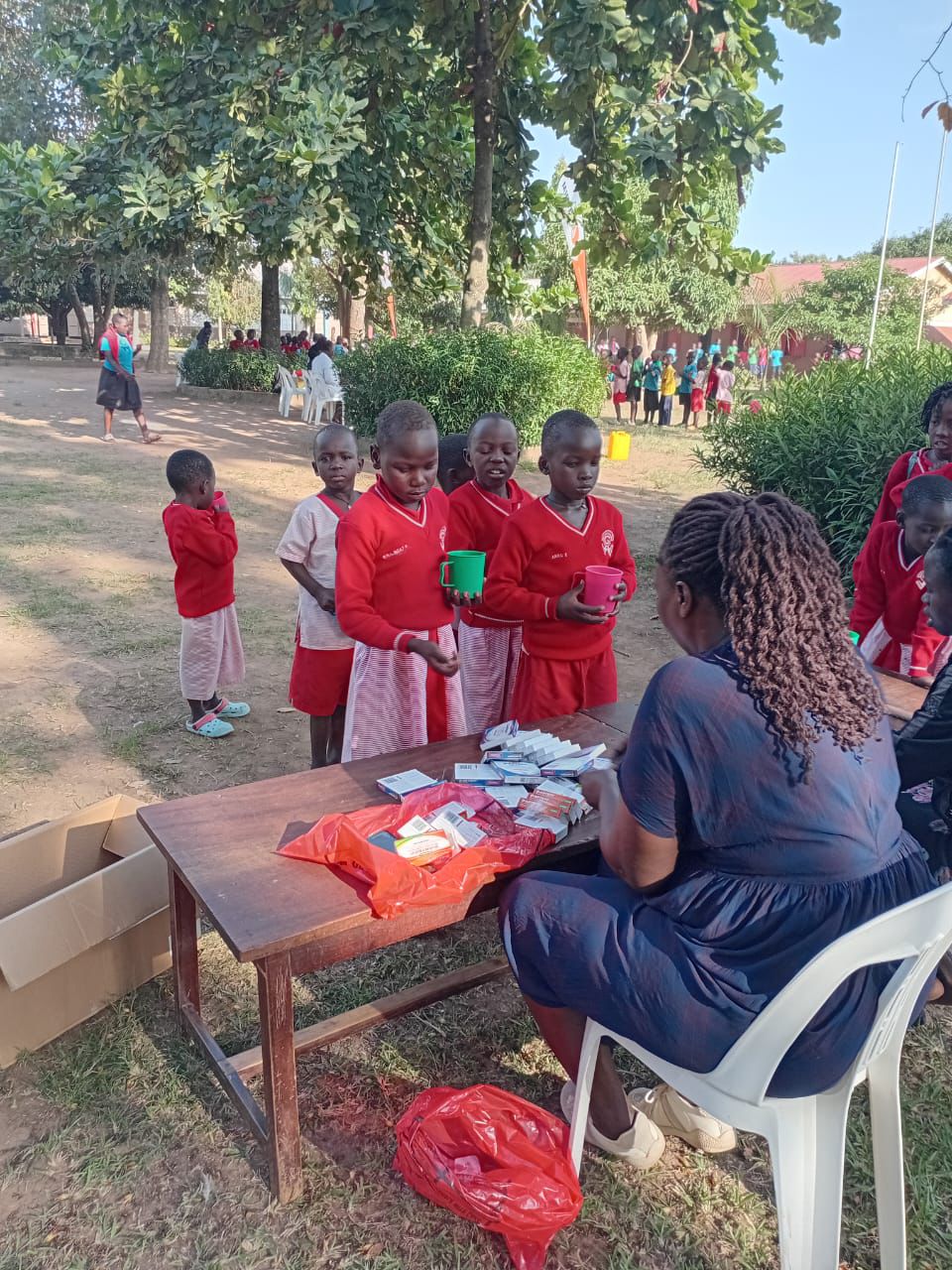
More than 2500 learners at Halcyon High School and Teso Boarding Primary School are receiving an added layer of protection against malaria through the ongoing implementation of Intermittent Preventive Treatment in Schoolchildren (IPTsc).
As the school protect program progresses, we remain committed to ensuring that learners stay healthy, remain in class, and have the opportunity to achieve their full academic potential without the disruption of malaria.
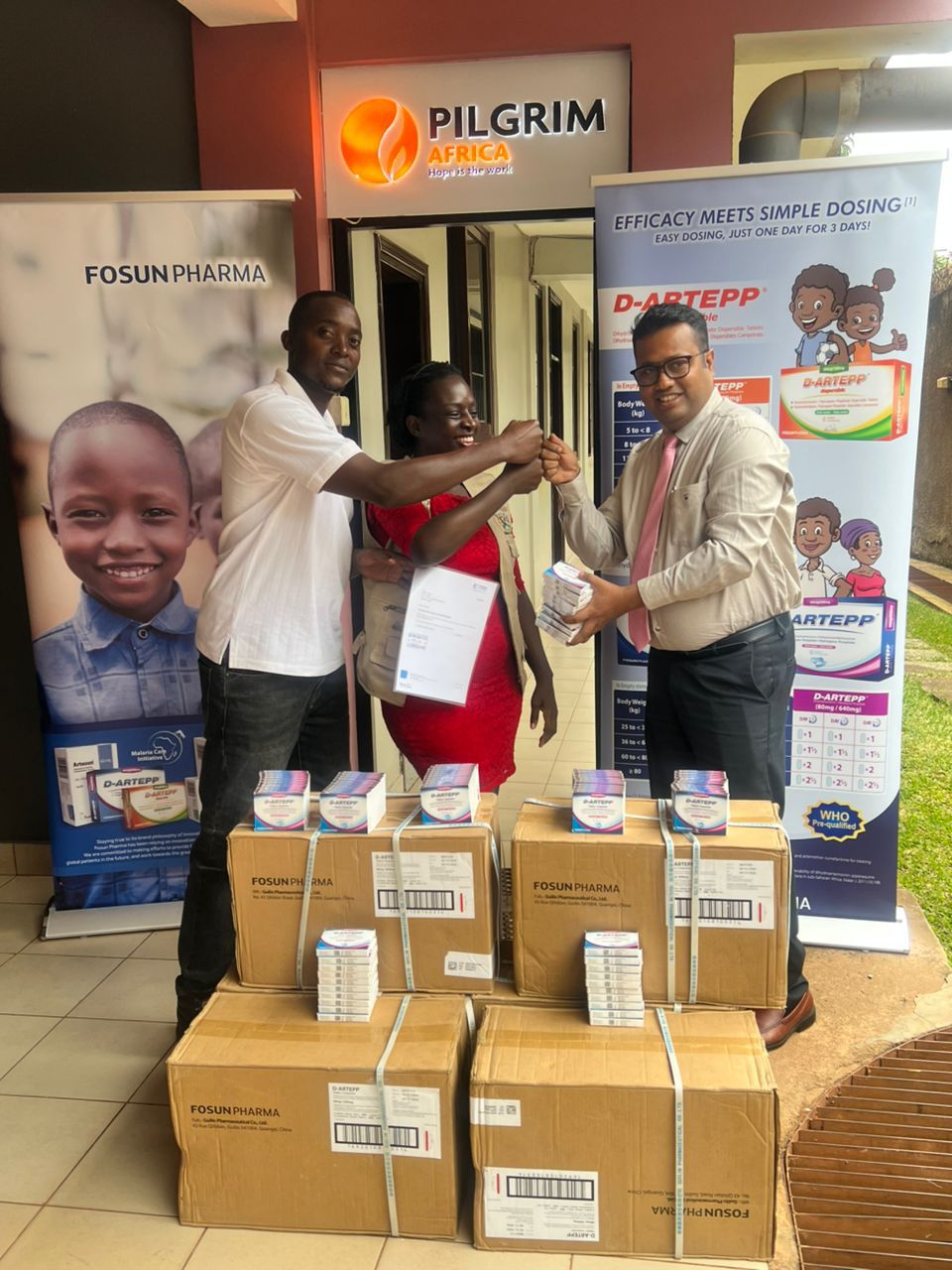
This milestone would not be possible without the generous donation of IPTsc medicines from Fosun Pharma & TRIDEM Pharma. Their support is helping bring proven malaria prevention interventions closer to the learners who need them most.
Together, we are investing in healthier schools, stronger learning outcomes, and a future where malaria no longer stands in the way of education.
Every time we visit schools, we see how malaria disrupts learning. A sick child cannot fully participate in class. For many families, repeated malaria episodes mean missed school days and added financial strain.
That is why we are deeply grateful to Fosun Pharma & TRIDEM Pharma for their continued support. For the second term in a row, they have donated 2,200 packs of D-Artepp 80mg/640mg Tablets to our malaria prevention efforts in Soroti city and district schools.
Starting 15 June, our teams will return to Soroti to work alongside schools and district health workers. Our goal: keep more children healthy and in class.
This recurring contribution is more than medicine. It is a sustained investment in children's health and education.
We know the need is still great, and no single organization can do it alone. We invite more partners, organizations, and individuals who believe in a healthier future for children to join us in expanding access to malaria prevention in schools.
Together, we can help ensure fewer children miss class because of malaria — and more children stay in school, learn, and grow.

For ⅔ of our students, January 10, 2022 marked the first time back to any kind of school since March of 2020, when students were sent home after only a month of school. Without access to remote learning, these students were out of school for the past two years. BOHC candidate students taking exams– those in Senior 4 and Senior 6– had a little school, but their class-time was very interrupted:
After so long out of school, many students have become “lost learners”. Uganda’s Ministry of Education estimates that fully 30% of learners did not return to their classrooms in 2022. BOH is currently only at 72% enrollment. Many former students now work to provide extra income to their families during the recession. Other students are married and/or pregnant. Nationwide, teenage pregnancy went from 1 in 4 young women to 1 in 3. Parents are also finding it increasingly difficult to pay tuition, as inflation is high, and commodities are extremely expensive. Basics like sugar, soap, cooking oil and fuel have nearly doubled in price. All of this will pose a challenge as BOH seeks to increase enrollment!
Impact on Campus Today

For the students who have been home for a long time, the transition to the disciplined schedule of a typical school day has been a challenge. The first few months of the school year have been spent settling the students; only now do BOH teachers report that students are at last able to focus and study properly.
Though the pandemic has been challenging, the BOH community is delighting in being back together, and enjoying learning very much. With the economy open and vaccines increasingly available, the mood in the country is positive. Despite many difficulties still to overcome, hope runs high. Please pray for BOH students and their families, as well as school faculty and staff.

For many students in the U.S., the pandemic has forced them to engage in online learning for the rest of this school year, and possibly the next. But how is the pandemic affecting our students at Beacon of Hope, many who do not have access to a computer or Wifi, making online learning impossible?
Here is an overview:
Please join us in praying for our students, their families, and our teachers.

We’ve just received a $23k grant to do remote education at Beacon of Hope School. A massive THANK YOU to The Allen Family Foundation for this game-changing grant! We can now purchase tablets and internet access for all 80 A-level candidate students and instructors for the 5 remaining months of the school year.
We will be providing IT support as well. This grant will allow our students to access online educational materials like their more advantaged peers in urban centers, and to study for their national exams. This grant truly levels the playing field.
The tablets will have an important “life beyond the pandemic”. The tablets will become property of the school, to be redistributed for use by next year’s incoming Senior 6 class. Our eventual hope is to provide tablets for IT instruction to the whole student body, as an essential part of preparing young women and men for the 21st century. We are thrilled to start with this year’s candidate class.


Moses, who’s been the Sponsorship Officer since Pilgrim’s inception in 2001, knows all too intimately the joys and pains of informing children whether or not they get sponsored to attend school.
There are countless children like Racheal here, children who hope and hunger for nothing more than the right to an education. Informing their yearning faces that we can’t afford to enroll any more students is a wholly heart-wrenching experience. It is an honor to help people achieve the basic needs of education, food, medication that they’ve been denied. I look into the eyes of these children and their eyes are asking for intervention in their future.
Will you intervene for one of these children?
The hardest moments in my job is telling children that we can’t afford to enroll any more students. You can see that they have no alternative, especially for those barely living off of one meal a day. I’ve had many children follow me to school, pleading to be accepted. One girl walked over 50 km with her luggage on her head just looking for an education; another girl sat on the compound until we took her in; she eventually graduated and went to university.
Everyone has potential; education can be the key to unlocking it.
I have seen the children uplift the school, climbing ladders of success and excellence. I worry where these students would be or what would become of their immense potential if they had been left in the camps, bushes, or villages.
There are more children left in the camps, in the bush, among villages lacking access to education, will you sponsor them?
You can support students by giving the gift of HOPE using our Giving Catalog!

My name is Racheal Atuko and I am an 18-year-old student at Beacon of Hope College.
My family has been very poor and broken since childhood and yet, I am a firm believer in the phrase ‘things happen for a reason’. When my father refused to pay for my schooling, my mother dumped me at BOH with no money and moved away. When I found a mass in my breast, I couldn’t afford the surgery or painkillers that I needed. Doctors feared I had breast cancer. I experienced various levels of pain due to my medical condition and my family’s abandonment. But, I believe this all led me to BOH and there I found a community I could rely on.

I feel like I’m the luckiest to have joined BOH. This school has been a life-changing blessing for me, like a small, happy family where I find my peace and strength. My financial state meant that I couldn’t afford food, school supplies, or even my breast surgery, and I often felt so alone and miserable. But through all this, my friends and teachers at BOH reassured and supported me in every way (my friends even paid for my surgery); they were the family that did not abandon me.

I believe things happen for a reason; I believe all the pain I endured led me to the love I found at BOH; I believe you are reading this now so I can tell you that people like me exist—people whose lives have been saved from misery and brightened by BOH.

Your support is so important to us because, without Beacon of Hope, our lives would have been forever lost in the brokenness of poverty and sickness. But thanks to you, we are studying, we are provided for, we are loved. So, thank you for providing for us and I implore you to please continue your generosity; there are more like me.
May God bless you,
Racheal Atuko
P.S. You are reading this for a reason.

In Uganda, the number of children in attendance drastically plummets from primary to secondary school. Census data from 2004 indicates that for every ten students in primary schools, only one is enrolled in secondary schools. Pilgrim Africa has assumed a comprehensive approach in our mission to remedy this: our malaria research, clinics, and scholarships work together to circumvent the challenges of poverty and sickness that prevent most Ugandan children from their education.
Most recently, Pilgrim Africa has adopted another approach to fulfill this mission—the Annex Renovations. These renovations are seeing abandoned and derelict buildings transformed into fully furnished classrooms, dormitories, latrines, and kitchen spaces.


Our vision of sustainability is infused throughout these renovations as we have implemented solar panels with back-up battery charging systems, and a rainwater catchment tank (which is already filled with fresh water from the seasonal rains).


Though final renovations are still ongoing, the dormitories were opened to the students in September. This was a joyous and exciting event for them since, compared to their previous overcrowded dorms, these new dorms provided them with spacious living quarters and healthier living conditions. A houseparent also expressed his enthusiasm that the children “would finally have access to reliable light and decent bathrooms.”
On the left below, you’ll see the old dormitories, and pictured on the right below are the new bed frames in the new dormitory on the Annex property.


These dorms also increase our school’s enrollment capacity. The dorms currently house 154 of our 658 students, but next year they will be able to house 300 extra students—that’s 300 more Ugandan children receiving an education year over year!
The Annex Renovations serves as an example of Pilgrim Africa’s dedication to Uganda’s children and as a reminder that anything can be given new life and transformed into something meaningful and instrumental.
THANK YOU to The Zarmada Giving Fund for making these renovations possible!